
 Back
Back
Plas yn Rhiw in Pwllheli
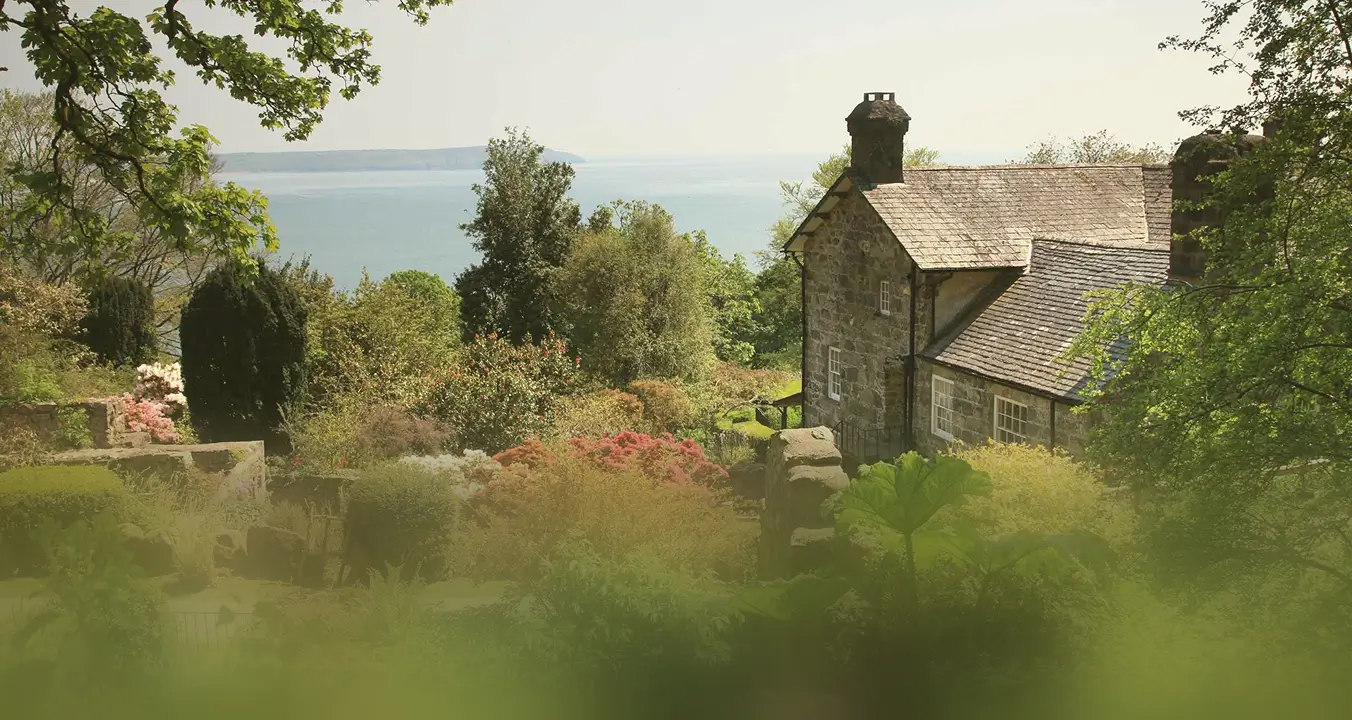
Perched on the hillside overlooking the Llyn Peninsula, Plas yn Rhiw is a beautiful historic manor house surrounded by ornamental gardens, enchanting woodland and spectacular countryside. Located roughly 11 miles from the seaside town of Pwllheli, this National Trust property offers visitors the opportunity to discover a fascinating piece of Welsh heritage while enjoying exceptional views across the Llyn Peninsula and on towards Cardigan Bay.
The combination of an atmospheric period property, gorgeous gardens and scenic walking routes make Plas yn Rhiw a great destination for history lovers, ramblers, horticultural enthusiasts and even foodies, with the on-site tea rooms being a must visit for anyone with a sweet tooth.
Read on to learn more about Plas yn Rhiw, it’s history and why it is worth adding to your Pwllheli holiday itinerary.
The History of Plas yn Rhiw
Plas yn Rhiw’s history stretches back to the 17th century, when the first building on these grounds were constructed in 1634 by the Lewis family. The Lewis’ had deep roots in the area which can be traced back to Tudor times and were descended from a 9th century King of Powys.
The original property subsequently passed through the Lewis family before Jane Lewis married William Williams. During the early 19th century, the building was extensively renovated and enlarged, probably following the marriage of their daughter to Captain Lewis Moore Bennet in 1820. A kitchen wing was added during the middle of the century, helping to create the pretty manor house that stands to this day.
The estate was eventually sold in 1874 to Thomas Roberts who passed the property onto his son and was occupied by various tenants before eventually falling into disrepair. This may have been the end of the property if it hadn’t been for three remarkable sisters. Eileen, Lorna and Honora Keating, who came from Nottingham, acquired the property in 1938 and moved there with their widowed mother in 1939. They found a house in a serious state of neglect, with the garden so overgrown with brambles that they reportedly had to enter through a window.
The sisters devoted themselves to restoring both the house and its gardens. They were also passionate campaigners for the protection of the Welsh countryside, supporting conservation organisations and opposing developments they believed would damage the local environment. Their efforts ultimately ensured that Plas yn Rhiw was preserved for future generations.
The sisters donated the surrounding land to the National Trust in 1946 and the remainder of the property followed in 1952. They had already opened the house to visitors by this point and continued living at Plas yn Rhiw until Lorna’s death in 1981.
Plas yn Rhiw Tea Rooms
A visit to Plas yn Rhiw would not be complete without stopping by at the Plas yn Rhiw cafe, also known as the Plas yn Rhiw Tea Rooms. Operated by a local family-run business rather than the National Trust, this charming tearoom provides somewhere to relax and enjoy refreshments after exploring the grounds.
The Plas yn Rhiw tea rooms serve a selection of light bites, cakes, plus hot and cold refreshments, providing an ideal place to take a break during your visit. Best of all, the setting means you can enjoy your lunch while marveling at wonderful views across the surrounding landscape.
The cafe is popular with visitors and makes an excellent addition to a tour of Plas yn Rhiw. Whether you fancy a slice of cake, a cup of tea or something slightly more substantial, it well worth including in your itinerary.
The Plas yn Rhiw Gardens
The Plas yn Rhiw gardens are one of the property’s greatest features. Restored and lovingly maintained by the Keating sisters, the ornamental garden occupies almost an acre and is arranged as a series of distinct spaces surrounded by box hedging and connected by grass and gravel paths.
The sheltered hillside location creates a particularly favourable environment for plants, trees and shrubs, with the garden benefiting from the area’s relatively mild climate. Flowering plants provide plenty of seasonal colour, while horticultural enthusiasts will no doubt be interested in the magnificent magnolia which were planted by Honora Keating herself in 1946.
Irrespective of your interest in the plant life, the setting is a major draw. The elevated position provides wonderful views across the Llyn Peninsula and Cardigan Bay, creating a memorable backdrop for a leisurely stroll through the gardens which are also dog friendly.
Plas yn Rhiw Walks & Woodland
There is more to explore beyond the formal garden, with the wider estate incorporating woodland, meadow and an orchard. The lower woodland provides a peaceful place to wander beneath the trees, while the wider landscape opens up to beautiful countryside and coastal views.
For those wanting to explore further, the National Trust’s Plas yn Rhiw and Rhiw Village Walk is a 2.3-mile circular route taking around an hour. The moderately challenging walk passes through coastal woodland, heads towards Rhiw village and returns to Plas yn Rhiw via country lanes, with views towards Hell’s Mouth Bay along the way.
Dogs can accompany their owners on the permitted walks around the grounds and gardens as long as they are kept on a short lead. There are restrictions in place with dogs not permitted into the house or cafe, but there is dog friendly outdoor seating provided by the cafe.
Visit Plas yn Rhiw from Gimblet Rock
With its fascinating history, beautiful gardens, spectacular scenery, woodland walks and welcoming tea rooms, Plas yn Rhiw is a wonderful addition to any North Wales holiday itinerary. The property is located roughly 11 miles from Gimblet Rock Holiday Park, making it easy to visit the attraction during your time away.
Take the first step towards visiting Plas yn Rhiw today by booking holiday accommodation in Pwllheli at Gimblet Rock Holiday Park for a 5 star experience you won’t soon forget.